Key takeaways
- QNT lives only on Ethereum as an ERC-20 token at
0x4a220E6096B25EADb88358cb44068A3248254675. Any "QNT" on BNB Chain, Solana or elsewhere is a third-party copy or a scam. - Every QNT transfer is an Ethereum transaction that pays gas in ETH, not QNT. You need a little ETH in the sending wallet.
- Transfers between accounts inside the same exchange never touch the blockchain, so they will not appear in any explorer.
- The explorers agree on transfers but not on holder counts: about 187,000 (Etherscan, Ethplorer) versus about 195,000 (Blockscout).
- Sending QNT to the contract address itself, or on the wrong network, is irreversible. Check the first and last characters every time.
How QNT moves on Ethereum
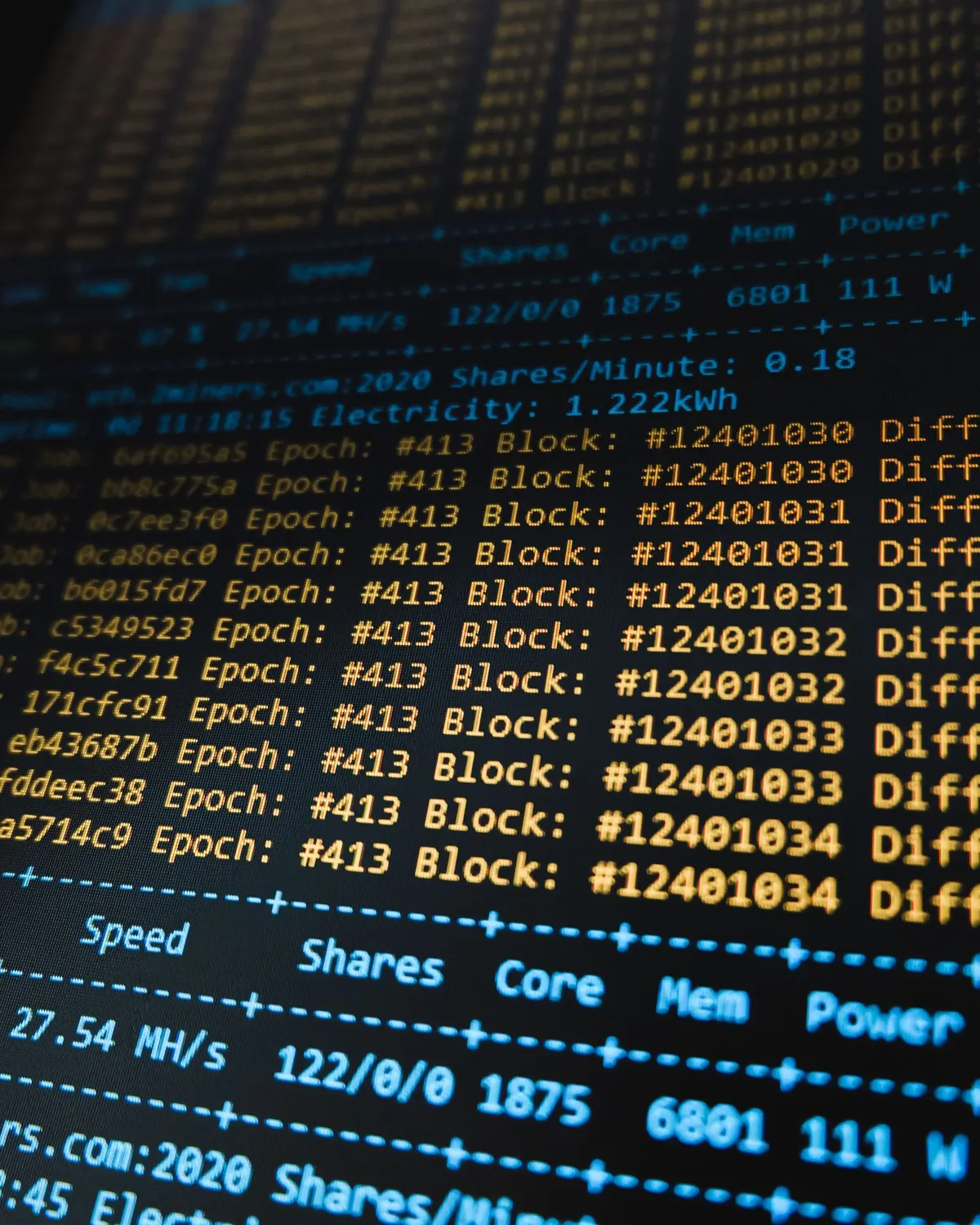
Quant does not run its own blockchain for the token. QNT is a standard ERC-20 contract on Ethereum mainnet, deployed in 2018 with 18 decimals, and the contract is nothing more exotic than a ledger of balances inside Ethereum's state. When you "send QNT", your wallet calls the contract's transfer function; the contract subtracts the amount from your balance, adds it to the recipient's, and emits a Transfer event recording from, to and value. Explorers read those events to build the transfer lists you see above. (Terms such as ERC-20, gas and confirmations are defined in the glossary.)
Because the token contract is an Ethereum smart contract, every transfer is an Ethereum transaction, and Ethereum transactions are paid for in ETH. A wallet holding QNT and no ETH cannot move the QNT until it is topped up with enough ETH to cover gas, a fact that catches out new holders every week. The fee depends on network congestion, not on the amount of QNT sent; moving one token costs the same as moving ten thousand.
Once a transaction is included in a block it is confirmed; each subsequent block adds a further confirmation, and after enough of them the chance of a reorganisation is negligible. Exchanges typically wait for a set number of confirmations before crediting a deposit, which is why a transfer that already shows "Success" in an explorer can still take some minutes to appear in your exchange balance. Blocks on Ethereum arrive roughly every twelve seconds.
How to read a QNT transaction
Paste a transaction hash into the tracker above or into any explorer and you will see the same handful of fields. Here is what each one tells you.
- 1
Transaction hash
A 66-character string starting with
0x. It is the unique fingerprint of the transaction and the only thing an exchange or a counterparty needs from you to find it. Hashes are case-insensitive; the first six and last four characters are enough to recognise one at a glance. - 2
From and To
The sender's address, and the address the transaction was sent to. For a token transfer, "To" is usually the QNT contract, because you are calling its transfer function; the actual recipient of the tokens appears in the Transfer event, which explorers show as a separate "Tokens transferred" line. Do not mistake the contract address for the recipient.
- 3
Block number and timestamp
Which block included the transaction and when that block was produced. The number of blocks mined since then is the confirmation count. A transaction with no block number is still pending in the mempool, or has been dropped.
- 4
Status
"Success" means the contract executed and balances changed. "Fail" or "Reverted" means it did not, usually because the sender lacked the balance, set too little gas, or sent to a contract that rejected the transfer. A failed transaction still consumes gas, so you lose the fee even though no QNT moved.
- 5
Value and fee
The "Value" field on an Ethereum transaction is the amount of ETH sent, which for a token transfer is normally zero. The QNT amount is in the token-transfer line, shown with 18 decimals converted to a human figure. The fee is gas used multiplied by the gas price, paid in ETH; the tracker above converts it for you.
Searching an address instead of a hash shows the current QNT balance and, on a full explorer, the complete history of transfers in and out. That is enough to confirm that a deposit you are waiting for has actually been sent, or that a withdrawal left your exchange.
Verify the contract address and avoid fakes
The single most important habit for any QNT holder is checking the contract address. The real one is:
Anyone can deploy a token called "Quant" with the symbol "QNT" on Ethereum or any other chain in minutes. Explorers display these alongside the real token, usually with a warning label, and decentralised exchanges will happily list them. The only thing that distinguishes the genuine token is the address. When adding QNT to a wallet manually, paste the address above rather than searching by name; when buying on a DEX, check that the pool's token address matches; when an exchange shows a deposit address for QNT, confirm the network is Ethereum (ERC-20) before sending.
A few details reassure once you are on the right contract: Etherscan shows the contract name as "StandardToken", compiled with Solidity 0.4.21, with no owner functions, and lists the 2018 ICO details with Switzerland as the country. Holders number in the hundreds of thousands and lifetime transfers run past 3.8 million. A fake will have a handful of holders and a creation date long after 2018.
Scams around the token tend not to involve fake contracts at all but fake websites: a drainer site at claims-quant.network imitating the official domain with a "claim treasury rewards" button, a fraudulent "QNT Mysterybox" airdrop on nft-quant.com, and lookalike wallet sites that harvest seed phrases. Quant has no airdrop, no rewards claim and no official wallet. The is Quant legit page keeps a running list.
Etherscan vs Blockscout vs Ethplorer
Three public explorers cover the QNT contract, and they are better at different things. All three read the same chain, so transfer and balance data match; the differences are in counting, features and access.
| Explorer | Holders shown | Strengths | Public API |
|---|---|---|---|
| Etherscan | ~187,000 | Richest labels (exchanges, contracts), verified source code, ICO panel, token analytics | Requires a free API key; 3 calls/s, 100,000 calls/day |
| Blockscout | ~195,000 | Open-source, clean REST API with CORS, fast transfer feed; powers the tracker on this page | No key needed; rate-limited per window |
| Ethplorer | ~187,000 | Token-centric view, lifetime transfer count (3.87 million), top-holder charts | "freekey" works with tight limits (20/min, 1,000/day) |
Why do holder counts differ by about 8,000? Each explorer applies its own rule for dust balances, addresses that once held QNT and now hold a rounding error, and contract-held balances. None of the counts is wrong; they measure slightly different things. For most purposes "roughly 190,000 addresses" is the honest number. The tracker above uses Blockscout because its API is open and sends the right headers for a static site to call it from your browser; if it fails, the widget simply hides itself rather than showing stale numbers.
Etherscan also exposes a "max total supply" of 45,467,000 QNT, which is the contract's pre-burn figure, not the live supply of 14,612,493. The tokenomics page explains why.
Why exchange transfers are invisible on-chain
If you buy QNT on an exchange and later sell it there, or send it to another customer of the same exchange, no Ethereum transaction occurs. Exchanges hold customer tokens in a small number of pooled wallets and keep an internal ledger of who owns what. Trades, internal transfers and even some withdrawals to other users of the same venue are just updates to that ledger. The blockchain only sees the exchange's own movements: deposits arriving from customers, withdrawals leaving, and periodic sweeps from deposit addresses to cold storage.
This has practical consequences. A transfer that your exchange says is complete may have no hash, because it never left the exchange. Daily trading volume of $40 million or more across exchanges corresponds to far fewer on-chain transfers than you would expect. And the holder count on explorers understates the number of people who own QNT, because Coinbase, Binance or Kraken each appear as a few addresses holding tokens for many thousands of customers. If you want your QNT to be visibly yours on the chain, withdraw it to a wallet you control, and accept that you then pay gas in ETH to move it.
Privacy notes
Ethereum is pseudonymous, not anonymous. Every QNT transfer, balance and counterparty is public forever, linked to an address rather than a name. The moment an address can be tied to you, through an exchange withdrawal, an ENS name, a public donation or a post, its whole history is readable by anyone. Explorers add labels for known exchange wallets, so a transfer from a labelled Coinbase address to your wallet tells an observer where you bank.
The tracker on this page runs entirely in your browser: your searches go directly to Blockscout's public API and are not stored or seen by this site. Blockscout's own privacy terms apply to the request. If you want to look up an address without associating it with your IP, use a VPN or Tor; if you want to keep holdings private, use fresh addresses for each withdrawal and avoid reusing one address across services. None of this makes you invisible; it only raises the cost of linking.
Typical mistakes, and how to avoid them
Sending QNT to the contract address
The contract address is where the token logic lives, not a wallet. Tokens sent there are credited to the contract itself, which has no function to send them back; they are gone. This happens when people copy the contract address from an explorer thinking it is a deposit address. Rule: you deposit to an address an exchange or wallet gives you, never to the address of the token.
Wrong network
Canonical QNT exists only on Ethereum mainnet. It is not natively on BNB Smart Chain, Solana, Polygon or Arbitrum, and Quant has not issued an official wrapped or bridged version; CoinGecko lists one third-party representation on the Energi network, which is not the real token. If an exchange offers QNT withdrawals on several networks, choose Ethereum (ERC-20) unless you are certain the receiving wallet supports the other one. Sending on BEP-20 to an Ethereum-only wallet is one of the most common ways to lose tokens, and recovery depends entirely on the receiving service's goodwill.
No ETH for gas
A wallet with QNT and zero ETH can receive but cannot send. Keep a small ETH balance in any wallet you use for QNT. Hardware wallets such as Ledger store QNT inside the Ethereum account, with the Ethereum app open, for exactly this reason.
Trusting the name instead of the address
Wallets and DEX interfaces search tokens by name, and there are many "Quant" tokens. Always add QNT by its contract address, and check that the number of holders and the creation date match the real contract.
Reading "To" as the recipient
As explained above, the "To" field of a token transfer is the QNT contract. The tokens' destination is in the Transfer event. If you are checking that a payment reached you, look at the token-transfer line, not the top-level To field.
Assuming a failed transaction cost nothing
Reverted transactions still pay gas. Before retrying, read the failure reason in the explorer; sending again with the same mistake just burns more ETH. For questions about buying rather than moving QNT, the how to buy guide and the exchanges page cover the on-ramp; for prices, see the live QNT price.
Frequently asked questions
What is the QNT contract address?
0x4a220E6096B25EADb88358cb44068A3248254675 on Ethereum mainnet, 18 decimals. Verify it on Etherscan or Blockscout before adding the token to a wallet or sending to a deposit address.
How do I track a QNT transaction?
Paste the transaction hash (66 characters starting with 0x) into the tracker at the top of this page or into Etherscan, Blockscout or Ethplorer. You will see the status, block, sender, the QNT amount in the token-transfer line, and the ETH fee. An address search shows the current QNT balance.
Is QNT on BSC, Solana or Polygon?
No. The only official QNT is the ERC-20 on Ethereum. Any "QNT" on another chain is a third-party copy (CoinGecko lists one on Energi) or a fake. If an exchange lets you choose a network for withdrawal, pick Ethereum (ERC-20).
Why is my QNT transfer not showing on the explorer?
Either it has not been broadcast yet (check the hash), it is still pending, or it never touched the blockchain because it happened inside an exchange's internal ledger. Exchange-to-exchange transfers between customers of the same venue produce no on-chain transaction.
Do I need ETH to send QNT?
Yes. QNT transfers are Ethereum transactions and the gas fee is paid in ETH. The amount depends on network congestion, not on how much QNT you send. Keep a small ETH balance in any wallet holding QNT.
How many people hold QNT?
About 187,000 addresses according to Etherscan and Ethplorer, about 195,000 according to Blockscout, the difference being how each counts dust balances. The real number of owners is higher, because each exchange holds tokens for many customers in a few addresses.
Sources and further reading
- Etherscan: QNT token contract etherscan.io
- Blockscout: QNT token on Ethereum mainnet eth.blockscout.com
- Blockscout API v2: QNT token info and transfers eth.blockscout.com
- Ethplorer: QNT token info (holders, transfers) api.ethplorer.io
- Blockscout docs: API requests and limits docs.blockscout.com
- Etherscan docs: API rate limits docs.etherscan.io
- Ethplorer API wiki (freekey limits) github.com
- Trust Wallet assets registry: QNT metadata (ERC-20, 18 decimals) raw.githubusercontent.com
- Blockworks token transparency filing: Quant (contract audit notes) blockworks.com
- Ledger support: storing QNT on the Ethereum account support.ledger.com
- PCrisk: "Quant rewards" phishing site pcrisk.com
- PCrisk: fake "QNT Mysterybox" airdrop pcrisk.com